Role of Family to Succeed The Healthy Indonesia Program
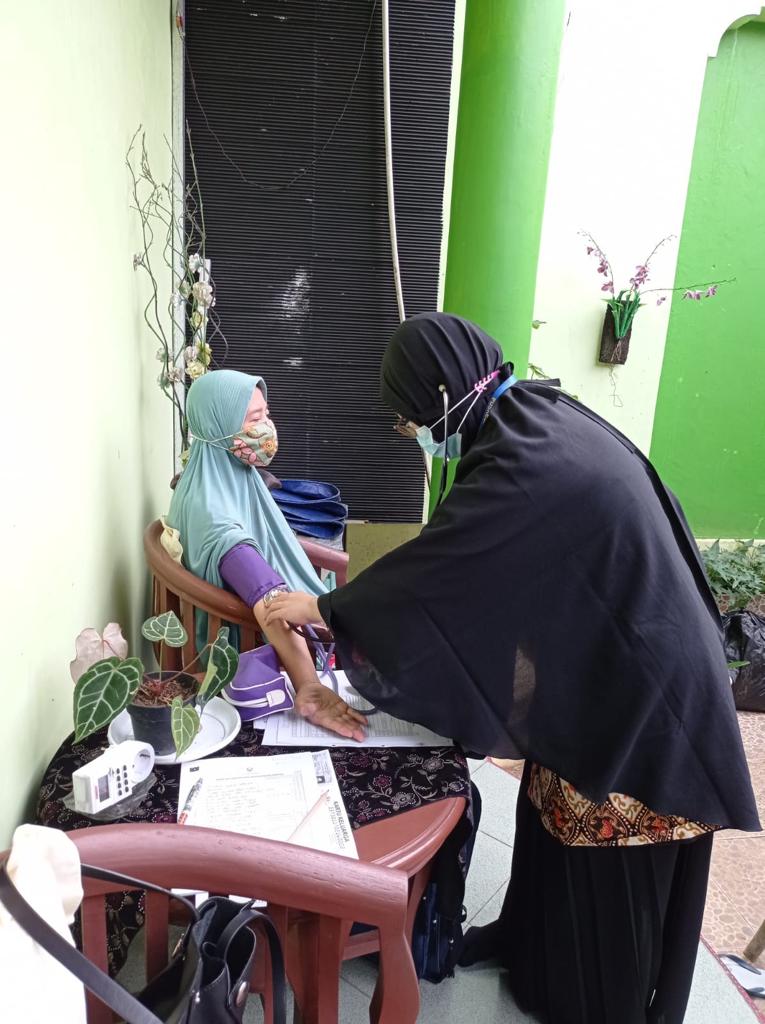
The Healthy Indonesia Program through Family Approach (Program Indonesia Sehat dengan Pendekatan Keluarga or PISPK) has started to be implemented since 2016 and is expected to attain total coverage in 2024. PISPK is one of the Public Health Care (PHC) ways to improve access to health care services by visiting the families in its working areas, since the family is the smallest unit in society which decides the health status of the community.
Thank you for reading this post, don't forget to subscribe!This program is assessed by the Healthy Family Index (Indeks Keluarga Sehat or IKS) which contains 12 main indicators, such as:
- Couples in reproductive age (15-49 years old) take part in Family Planning program
- Mothers give birth at health care centers
- Infants (0-23 months old) get complete basic childhood vaccination
- Infants (0-6 months old) are exclusively breastfed for the recommended 6 months
- Monitoring growth and development of the child (2-59 months old)
- Patients with pulmonary tuberculosis receive a standard treatment according to guidelines
- Patients with hypertension take medication regularly
- Patients with severe mental disorder (like schizophrenia) get treatment and not abandoned
- No family members smoke
- Family members have a health insurance
- Family members have access to clean water resources
- Family members have access or use safely managed sanitation services
These indicators must be fulfilled by the respective families in order to become a healthy family.
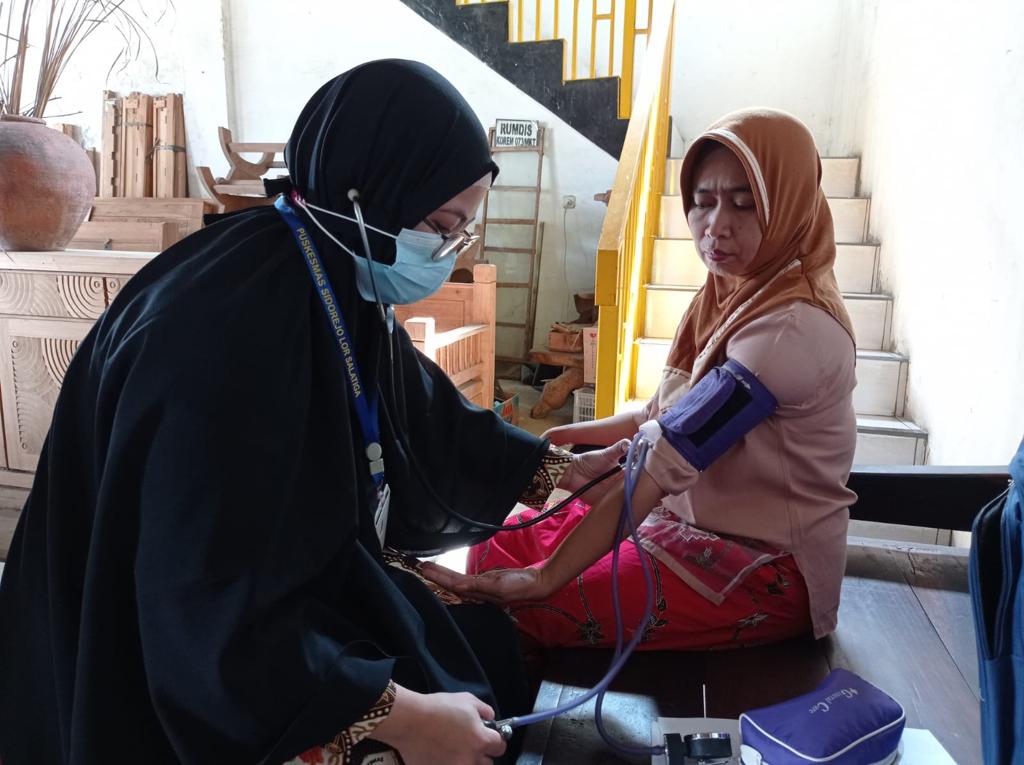
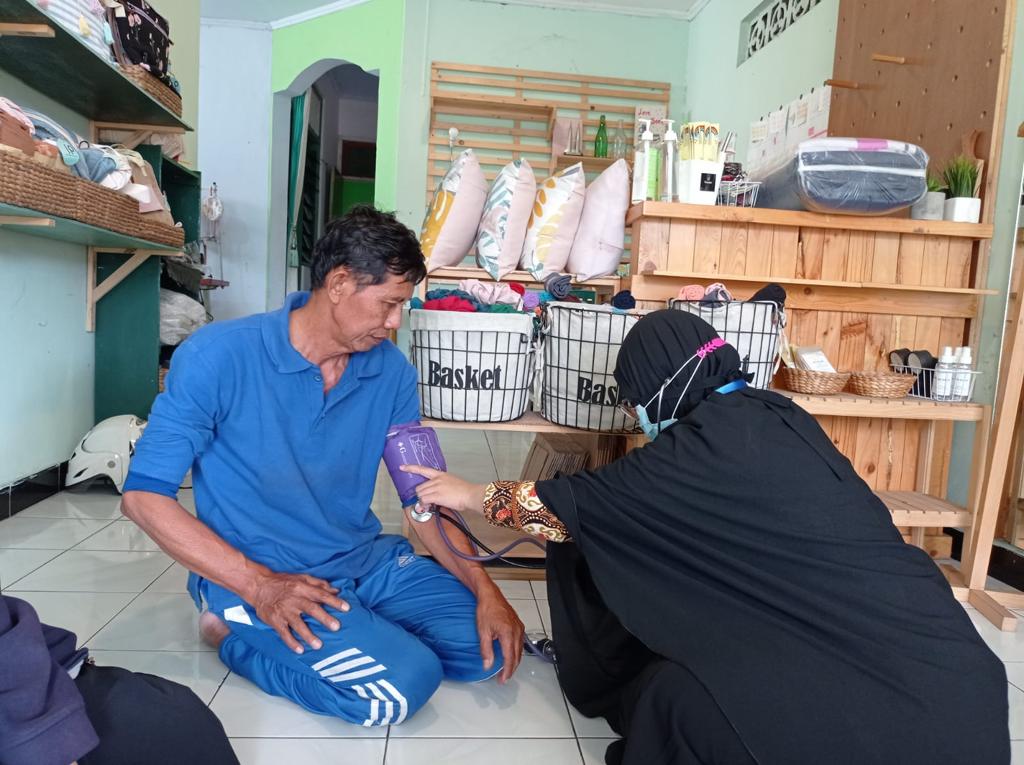
However, in May 2022, the number of families recorded in Sidorejo Lor Public Health Care’s data was 54% from all families in six urban villages (Blotongan, Sidorejo Lor, Salatiga, Pulutan, Kauman Kidul, and Bugel) which are included in our working area. This data means coverage of home visit in Sidorejo Sub-district was average dan must be raised. Therefore, we take a step further to collect data with the intention of achieving total coverage by home visit. Multiple stakeholders from outside Public Health Care was engaged to support this program through coordination, communication, and planning with a family focus.
When we finish collecting all of the data from six urban villages, we hope the result of data acquisition can bring the “healthy” terms in the future, specifically in Sidorejo Sub-district.